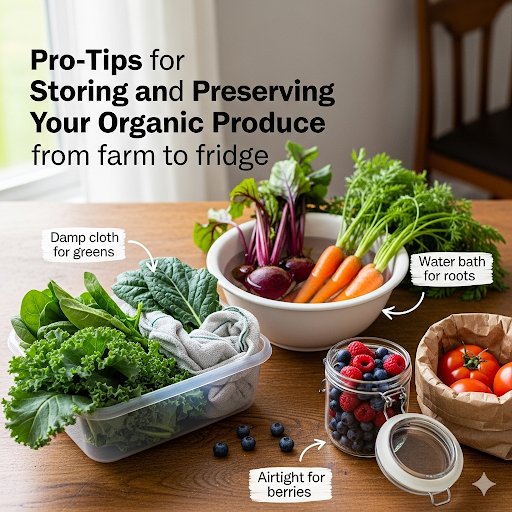
You’ve made the conscious choice to invest in fresh, organic produce—a decision that supports local farmers and your own health. But what happens when that beautiful bounty wilts before you can enjoy it all? Food waste is a major problem, but with a few simple tricks, you can make your organic purchases last longer. This guide will provide you with pro-tips for storing and preserving your produce, ensuring every delicious bite from the farm makes it to your table.
Leafy Greens: The Paper Towel Trick
Leafy greens like spinach, kale, and lettuce wilt quickly due to excess moisture. To keep them crisp, **do not wash them before storing.** Instead, place a clean paper towel at the bottom of a plastic bag or container. This will absorb any moisture and prevent spoilage. For best results, roll the greens gently in a paper towel and place them in an airtight container in the crisper drawer.
Berries: The Vinegar Bath
Berries are delicate and can mold quickly. To extend their life, give them a quick **vinegar bath.** Mix a solution of one part white vinegar to three parts water. Gently swirl your berries in the solution, then rinse them thoroughly with fresh water. The vinegar kills mold spores without leaving any taste. Dry them completely on a paper towel before storing them in a ventilated container in the fridge.
Root Vegetables: Keep Them in the Dark
Carrots, potatoes, beets, and turnips prefer a cool, dark environment. The best place to store them is in a cool pantry or cellar, ideally in a box with a loose lid or a paper bag. **Avoid storing them in plastic bags**, which can trap moisture and cause them to rot. For carrots, remove the green tops before storing, as they draw moisture from the roots and can make them go limp.
Simple Preservation Techniques
Freezing Herbs
Don't let leftover herbs go to waste! Finely chop them and pack them into an ice cube tray. Pour olive oil or water over the top and freeze. Once frozen, transfer the herb cubes to an airtight bag. They're perfect for adding a burst of flavor to soups, stews, and sauces.
Making a Simple Pickle
Got an abundance of cucumbers, radishes, or carrots? Make a quick pickle! In a jar, combine sliced vegetables with a simple brine of equal parts water and vinegar, a pinch of salt, and a dash of sugar. Add any spices you like (dill, garlic, peppercorns) and store in the fridge. They'll be ready to eat in a few days.
Reducing food waste is a crucial part of a sustainable lifestyle. By using these pro-tips, you can ensure that the delicious, nutritious food you buy not only nourishes you but also honors the hard work of the farmers who grew it.
For more sustainable living tips and to find fresh, organic products, visit www.onlinemarketplaces.net